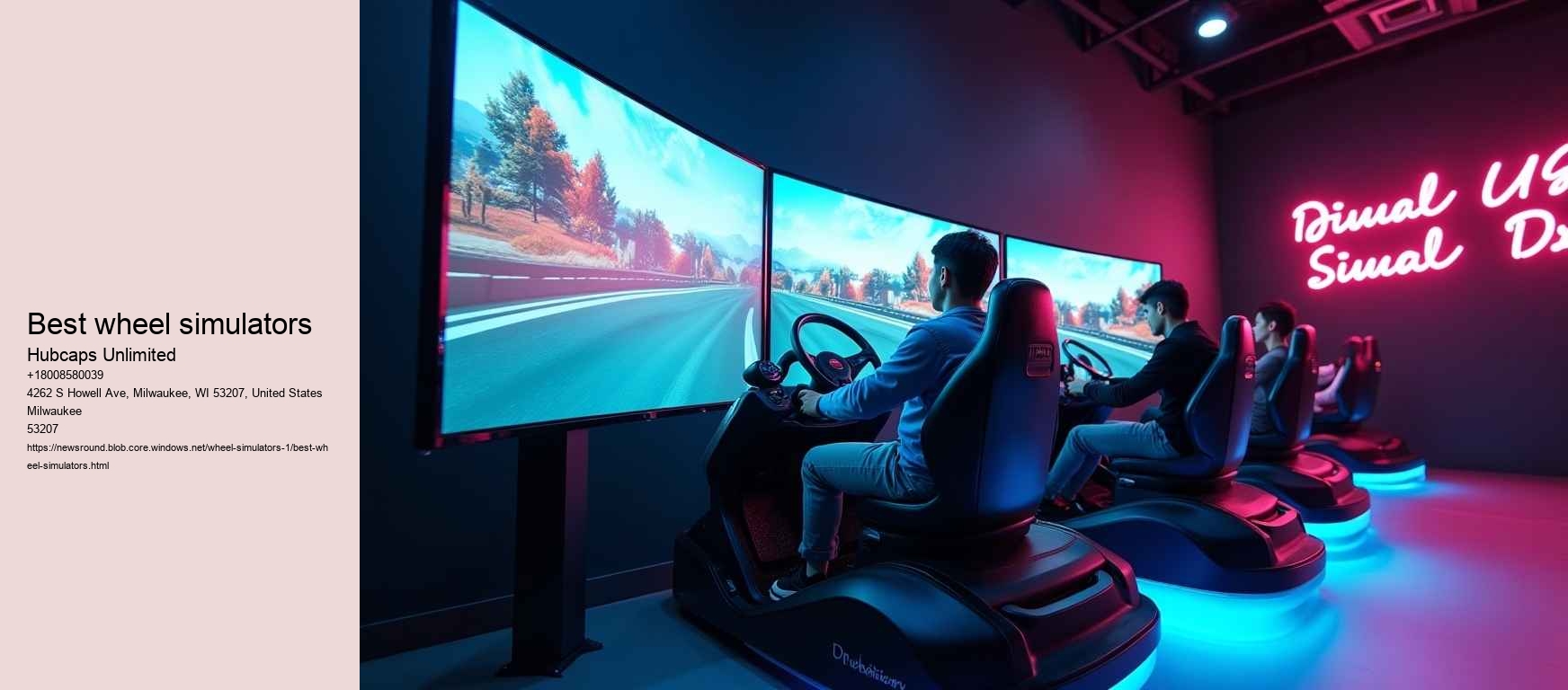
What to Look for in a Wheel Simulator
So, youre thinking about diving into the world of wheel simulators, huh? Thats awesome! Its a fantastic way to experience racing without actually, you know, wrecking your real car. But with so many options out there, it can feel a bit overwhelming. Dont worry, lets break down what you should be looking for to find the right wheel simulator for you.
First off, think about the feel. This is probably the most important thing. You want a wheel that gives you realistic feedback. Look for force feedback, which means the wheel will actually resist your movements and give you a sense of the road, the tires, and even the bumps. The stronger and more nuanced the force feedback, the more immersive the experience. Dont settle for something that just vibrates a little; you want to feel the car.
Next, consider the build quality. A flimsy plastic wheel might be cheap, but it wont last, and it definitely wont hold up to the kind of intense driving youll be doing. Look for wheels with metal components, especially in the wheel rim and the pedals. A sturdy build will not only last longer but will also feel more realistic and responsive.
Speaking of pedals, dont forget about them! A good set of pedals is just as important as the wheel itself.
trucks
- covers
- lugs
- buses
- installation
- caps
Compatibility is another key factor. Make sure the wheel you choose is compatible with the platforms you plan to use it on. Is it compatible with your PC, PlayStation, or Xbox? Check the specs carefully before you buy. Also, think about the games you want to play. Not all games fully support every wheel, so do a little research to make sure the wheel youre considering works well with your favorite titles.
Finally, think about your budget. Wheel simulators can range from relatively inexpensive to incredibly expensive. Dont feel like you need to break the bank to get a good experience. There are plenty of excellent mid-range options that offer a great balance of features and performance. Just remember to prioritize force feedback, build quality, and compatibility, and youll be well on your way to finding the perfect wheel simulator for your needs. Have fun racing!
Top Wheel Simulators: Our Recommendations
So, youre looking to dive into the world of wheel simulators? Awesome! Its a rabbit hole that can lead to some incredibly immersive and rewarding experiences. But with so many options out there, it can be tough to know where to start. Thats why weve put together our recommendations for the best wheel simulators, catering to different budgets and skill levels.
Forget just pushing buttons on a controller. A good wheel simulator genuinely puts you in the drivers seat. You feel the weight of the car, the subtle vibrations of the road, and the resistance of the tires as you navigate corners. Its a far cry from arcade racing and brings a level of realism thats hard to beat.
Our recommendations arent just based on specs and features. Weve considered the overall feel, the durability of the equipment, and the value for money. Weve looked at everything from entry-level wheels perfect for beginners dipping their toes in the water, to high-end setups that will satisfy even the most hardcore sim racers.
Ultimately, the best wheel simulator is subjective and depends on your individual needs and preferences. What kind of games do you play? Whats your budget? How much space do you have? These are all important questions to consider. Our goal is to provide you with a solid starting point, highlighting the pros and cons of different options so you can make an informed decision and find the perfect wheel to fuel your virtual racing passion. So, buckle up and get ready to explore the exciting world of wheel simulators – the tracks calling!
Force Feedback vs. Direct Drive: Which is Right for You?
Choosing the right wheel simulator can feel like navigating a minefield of technical jargon. maintenance Among the most important decisions youll face is whether to go with force feedback or direct drive. Both aim to immerse you in the racing experience, but they achieve it in fundamentally different ways, and the best choice for you depends heavily on your budget, dedication, and what you hope to get out of your sim racing.
Force feedback wheels, often the more affordable option, use a system of gears or belts to translate the in-game forces to the wheel. Think of it like power steering in a real car. You feel resistance when turning, and you get feedback like bumps and the feel of the road surface through the wheel. While this is a massive step up from a simple joystick, the gears or belts introduce some play or cogging which can mask some of the finer details the game is trying to communicate. They also tend to be less powerful, meaning you might not feel the full brunt of a violent crash or the subtle changes in grip as accurately.
Direct drive wheels, on the other hand, cut out the middleman. The steering wheel is directly connected to the motor shaft. This results in incredibly detailed and powerful force feedback. You feel everything – from the smallest vibrations in the tires to the full force of impact. The lack of gears or belts means theres virtually no latency or unwanted smoothing of the forces, giving you a much more realistic and direct connection to the virtual car.
So, which is right for you? If youre just dipping your toes into sim racing and want a significant upgrade over a controller without breaking the bank, a high-quality force feedback wheel is a fantastic starting point. Brands like Logitech and Thrustmaster offer excellent options that provide a good balance of performance and price. However, if youre a serious sim racer looking for the ultimate in realism and immersion, and youre willing to invest a considerable amount of money, then a direct drive wheel is the way to go. The level of detail and responsiveness they offer can truly transform your racing experience, allowing you to push your limits and shave precious tenths of a second off your lap times. Ultimately, its about finding the sweet spot between performance, budget, and your personal level of commitment to the virtual racing world.
Pedal Perfection: Choosing the Right Pedals
So, youre diving into the world of wheel simulators, huh? Thats awesome! Get ready for a seriously immersive experience. But lets be real, a great wheel is only half the battle. You need pedals that feel natural, responsive, and up to the task of countless virtual laps. Pedal Perfection: Choosing the Right Pedals isn't just about splurging on the most expensive set; it's about finding the perfect match for your driving style, your budget, and the types of games you play.
Think about it: are you a casual gamer who enjoys a relaxing cruise in a Euro Truck Simulator? Or are you a competitive racer, battling for milliseconds in Assetto Corsa? Your needs are vastly different. For cruising, a basic set of pedals with decent resistance might suffice. But for serious racing, you'll want something with progressive resistance in the brake pedal, allowing for fine-tuned control and realistic trail braking.
And then theres the question of materials. Plastic pedals can feel a little flimsy, especially under pressure. Metal pedals, on the other hand, offer a more robust and realistic feel. Theyre generally more durable and provide a more solid platform.
Dont underestimate the importance of adjustability, either. Can you adjust the resistance of the pedals? Can you change the spacing between them? Can you even invert them for a more realistic driving position? These adjustments can make a huge difference in comfort and control.
Finally, consider the technology. Some pedals use potentiometers to measure the pedal input, while others use load cells. Load cells are generally considered superior, as they measure the force youre applying to the pedal, rather than just the position. This results in a more accurate and consistent feel.
Choosing the right pedals is a personal journey. Do your research, read reviews, and if possible, try out different sets before you buy. Its an investment in your enjoyment, and a well-chosen set of pedals can truly elevate your wheel simulator experience from fun to phenomenal. Good luck, and happy racing!
Shifters and Other Accessories
Okay, so youre diving into the world of wheel simulators, huh? Youve probably seen the basic setups – a wheel, some pedals, maybe a comfy seat. But to really crank up the immersion and take your virtual driving to the next level, you absolutely need to consider shifters and other accessories. They're the cherry on top of the sim racing sundae.
Think about it: in a real car, especially a manual one, shifting gears is a huge part of the experience. Just mashing the accelerator isnt going to cut it. A dedicated shifter, whether its an H-pattern mimicking a traditional manual or a sequential shifter for faster, rally-style changes, adds so much realism. You get that satisfying clunk as you slot into gear, the need to coordinate the clutch (if youre going full simulation!), and a much deeper connection to the car. It's the difference between playing a video game and actually feeling like you're driving.
And it's not just shifters. Theres a whole ecosystem of accessories that can enhance your experience. Handbrakes are essential for drifting and rally games, allowing you to lock up the rear wheels and initiate those sweet slides. Button boxes give you quick access to in-game functions like pit limiter, brake bias, and traction control, without having to fumble with your keyboard. Even things like tactile transducers (bass shakers) that vibrate your seat based on engine RPM or road surface can add a whole new layer of feedback.
Ultimately, the best accessories are subjective and depend on the types of games you play and your budget. A hardcore rally fan might prioritize a high-quality handbrake and sequential shifter, while someone focused on GT racing might prefer paddle shifters and a button box. But no matter your preference, investing in these extras can truly transform your sim racing experience from a fun hobby into a genuinely immersive and engaging passion. mirrors Just be warned: its a slippery slope! Once you start adding accessories, you might find yourself constantly wanting to upgrade and improve your setup. But hey, thats half the fun, right?
Setting Up Your Wheel Simulator
Okay, so youve got the itch. The racing bug has bitten, and youre ready to trade your keyboard or gamepad for the immersive feel of a steering wheel. Awesome! But before youre tearing around the Nürburgring or drifting through the touge, you've gotta get your wheel simulator properly set up. It might seem a little daunting at first, but trust me, its worth the effort. A well-configured wheel can be the difference between feeling like youre actually driving and feeling like youre wrestling a malfunctioning arcade machine.
First things first, get the physical setup right. Mount your wheel securely to your desk or, even better, a dedicated racing rig. Wobbling and instability are the enemy of immersion. Make sure everything is at a comfortable and ergonomic height. Youre going to be spending a lot of time here, so treat your back and wrists kindly. And dont forget the pedals! Position them so your feet can comfortably reach them without straining.
Next, its time to dive into the software. Most wheel manufacturers provide drivers and companion software. Install these! Theyre essential for your computer to recognize the wheel and allow you to customize its settings. This is where the real magic happens.
Force feedback is the key to feeling the road. Experiment with the force feedback settings in the game and the wheels software. Start with lower settings and gradually increase them until you find a sweet spot where you can feel the road surface, bumps, and weight transfer without the wheel feeling overly heavy or jerky. You want it to feel informative, not exhausting.
Pay attention to the rotation angle. This determines how much you have to turn the physical wheel to turn the in-game wheel. Most racing games allow you to adjust this, and matching it to the car youre driving makes a huge difference. A Formula 1 car might only require 360 degrees of rotation, while a rally car might need 900 or more.
Finally, dont be afraid to tweak and experiment. Theres no one-size-fits-all setting. What feels good to one person might feel awful to another. Play around with different settings for different cars and tracks. Watch videos of other sim racers and see what settings they use as a starting point. The goal is to create a setup that feels natural and responsive, allowing you to focus on driving and enjoying the experience. Happy racing!
Wheel Simulator Maintenance and Care
So, youve invested in a wheel simulator, huh? Awesome choice! Whether youre chasing milliseconds in iRacing, drifting through corners in Assetto Corsa, or just enjoying a more immersive experience in your favorite racing game, a good wheel can make all the difference. But like any piece of precision equipment, your wheel simulator needs a little TLC to keep it performing at its best. Think of it like a real race car; it needs regular maintenance to stay competitive.
Maintenance and care for your wheel simulator doesnt have to be a chore. A little preventative action goes a long way. First, keep it clean. Dust and grime can build up, especially around the buttons and switches, affecting their responsiveness. A simple wipe down with a soft, slightly damp cloth after each session is usually enough. Avoid using harsh chemicals or abrasive cleaners that could damage the finish or internal components.
Next, pay attention to the connections. Make sure all the cables are securely plugged in and that there are no frayed wires. A loose connection can lead to intermittent performance issues or even damage the wheel. Cable management is also key; keeping the cables organized prevents them from getting tangled or snagged, which can put strain on the connectors.
If your wheel has force feedback, be mindful of the forces youre putting on it. While these wheels are designed to withstand a lot, continuously slamming the wheel from lock to lock can eventually wear down the internal motors and gears. Try to drive smoothly and avoid overcorrecting. trucks Think of it like driving a real car; smooth inputs are always faster and easier on the equipment.
Periodically check the firmware and drivers for your wheel. Manufacturers often release updates that improve performance, fix bugs, or add new features. Keeping your wheels software up to date ensures youre getting the best possible experience.
Finally, when youre not using your wheel, store it in a safe place where it wont be exposed to extreme temperatures or humidity. Ideally, keep it covered to protect it from dust and sunlight.
By following these simple maintenance tips, you can keep your wheel simulator in top condition for years to come, allowing you to enjoy countless hours of immersive racing. Remember, taking care of your equipment is an investment in your enjoyment. Now get out there and set some lap records!